
Introduction
There’s something deeply comforting about walking into a home that feels layered, soulful, and lived-in. That’s the magic behind boho home decor ideas—they invite you to relax, slow down, and surround yourself with objects that tell a story rather than follow a rulebook.
Unlike rigid interior trends, boho style thrives on freedom and personal expression. It’s about mixing old with new, pairing textures that technically “shouldn’t” go together, and creating a space that feels collected over time instead of decorated overnight.
In reality, many people are drawn to boho interiors because they want warmth without formality. They want a home that feels creative yet comfortable, stylish but never stiff. That’s exactly why this approach has remained popular across decades and cultures.
In this guide, you’ll find practical, realistic ways to bring boho aesthetics into your home—whether you live in a compact apartment or a spacious house—without turning your space into a cluttered showroom.

Understanding Boho Home Decor Style
Boho, short for bohemian, is less of a strict design style and more of a mindset. It borrows from global influences, artistic lifestyles, and free-spirited living.
What Makes Boho Decor Unique?
Boho interiors reject uniformity. Instead of matching furniture sets and identical finishes, the style embraces variation. You’ll often see:
- Mixed patterns and textures
- Handcrafted or vintage items
- Earth-inspired colors
- A sense of relaxed imperfection
That said, boho doesn’t mean messy. The best bohemian spaces feel intentional, balanced, and emotionally warm.
The Philosophy Behind Boho Spaces
At its core, boho decor is about storytelling. Each rug, cushion, or artwork reflects a memory, a journey, or a personal taste. Homes designed this way feel authentic because they are deeply personal.

Core Elements of Boho Home Decor Ideas
To truly understand boho home decor ideas, it helps to break the style into foundational elements. Think of these as building blocks rather than rules.
Layered Textures
Texture is everything in boho interiors. Smooth surfaces alone feel flat; layers bring depth.
Common texture combinations include:
- Woven rugs over wooden floors
- Linen cushions paired with leather seating
- Macramé wall hangings against painted walls
Eclectic Mix of Patterns
In boho spaces, patterns don’t compete—they converse. Florals, geometrics, tribal prints, and stripes can coexist beautifully when tied together through color.
Relaxed, Lived-In Feel
Boho homes never feel staged. Slightly wrinkled fabrics, imperfect pottery, and soft lighting all contribute to a sense of ease.
Color Palettes That Define Boho Interiors
Color sets the emotional tone of a boho space. Instead of stark contrasts, bohemian palettes lean toward warmth and depth.
Earthy Base Tones
Most boho interiors begin with grounded neutrals:
- Warm whites
- Sand beige
- Soft taupe
- Muted gray
These shades act as a calming backdrop for bolder accents.
Rich Accent Colors
Once the base is set, accent colors add personality:
- Terracotta and rust
- Olive and sage green
- Deep teal or indigo
- Burnt mustard
However, balance is key. Too many bold colors can overwhelm the space.
Using Color to Create Flow
In reality, successful boho homes repeat colors subtly across rooms. A cushion color in the living room might reappear as artwork in the hallway, creating cohesion without uniformity.
Furniture Choices for a Bohemian Look
Furniture in boho interiors prioritizes comfort, character, and craftsmanship over perfection.
Low and Comfortable Seating
Boho living spaces often feel grounded. Low-profile sofas, poufs, and floor cushions encourage relaxation and conversation.
Popular choices include:
- Low wooden sofas with plush cushions
- Leather or fabric poufs
- Floor seating layered with rugs
Vintage and Second-Hand Pieces
That said, not everything needs to be new. In fact, boho style thrives on pre-loved furniture. A slightly worn cabinet or antique chair adds authenticity.
Mixing Materials
Wood, rattan, metal, and upholstery can coexist effortlessly. The goal isn’t to match finishes but to balance them visually.
Textiles and Layering Techniques
If furniture sets the structure, textiles bring boho interiors to life.
Rugs as a Foundation
Layered rugs are a signature boho element. For example:
- A large neutral rug as a base
- A patterned kilim layered on top
This creates visual depth and softness underfoot.
Cushions and Throws
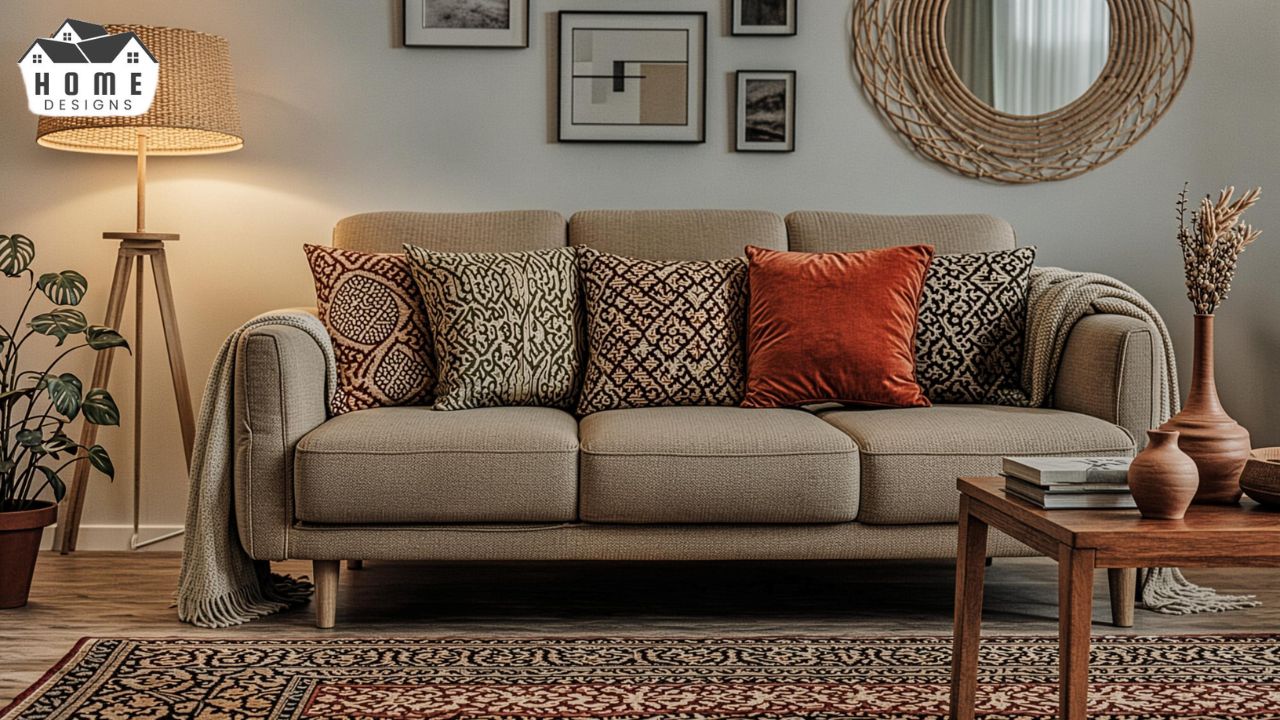
Mix cushion sizes, fabrics, and prints. Linen, cotton, wool, and even velvet can work together when tied by a shared color palette.
Use throws casually—draped rather than folded—to maintain that relaxed look.

Natural Materials and Organic Accents
Nature plays a central role in bohemian design.
Wood and Rattan
Wooden furniture with visible grain adds warmth, while rattan and wicker introduce lightness and texture.
Plants as Living Decor
Indoor plants are more than decorative accents—they bring energy into the space.
Popular boho-friendly plants include:
- Fiddle leaf fig
- Snake plant
- Hanging pothos
- Palm varieties
Even a few plants can dramatically change the mood of a room.
Wall Decor and Artistic Expression
Walls in boho homes act as creative canvases.
Gallery Walls with Personality
Instead of uniform frames, mix:
- Art prints
- Photographs
- Handmade pieces
- Mirrors
Keep spacing organic rather than perfectly symmetrical.
Textile Wall Hangings
Macramé, woven tapestries, or fabric panels add softness and cultural richness to walls, especially in minimalist rooms.
Lighting Ideas for a Warm Boho Ambience
Lighting can make or break a boho interior.
Soft, Ambient Lighting
Avoid harsh overhead lighting where possible. Instead, layer light sources:
- Table lamps
- Floor lamps
- Wall sconces
Warm bulbs (2700K–3000K) enhance the cozy atmosphere.
Decorative Light Fixtures
Pendant lights made of woven fibers or natural materials double as sculptural elements during the day.
Boho Decor Room-by-Room Guide
Living Room
The living room often sets the tone for the entire home. Focus on comfort, layered textiles, and a welcoming layout.
Bedroom
In boho bedrooms, comfort meets creativity. Layer bedding, mix patterns, and keep lighting soft and intimate.
Dining Area
Wooden tables, mismatched chairs, and textured runners create a relaxed, communal dining experience.
Small Spaces
Even small apartments can embrace boho home decor ideas by focusing on texture, plants, and thoughtful layering instead of large furniture.
Budget-Friendly Boho Styling Tips
Contrary to popular belief, boho decor doesn’t require a large budget.
Shop Second-Hand
Thrift stores and flea markets are goldmines for unique pieces.
DIY Decor Projects
Simple DIYs like painted pots, handmade cushions, or wall hangings add character without cost.
Edit Thoughtfully
In reality, boho isn’t about filling every corner. Leaving breathing room allows key pieces to shine.
Personal Background and Style Evolution
The rise of modern boho decor is closely tied to lifestyle shifts. As remote work and slower living gained popularity, people began prioritizing comfort and emotional connection in their homes.
Designers and homeowners alike started moving away from rigid minimalism toward more expressive interiors. Today, boho style reflects a desire for authenticity—homes that feel personal rather than performative.
Financially, boho interiors can scale easily. Whether investing in handcrafted furniture or styling with affordable textiles, the approach adapts to different budgets without losing its essence.
Frequently Asked Questions
What defines boho home decor ideas compared to other styles?
Boho decor focuses on layered textures, personal expression, and global influences rather than strict design rules or symmetry.
Can boho decor work in modern homes?
Yes. Modern-boho blends clean lines with warm textures, creating balance between structure and comfort.
Is boho style suitable for small apartments?
Absolutely. Strategic use of textiles, plants, and lighting can bring boho warmth even into compact spaces.
How do I avoid clutter in boho interiors?
Stick to a cohesive color palette and rotate decor seasonally instead of displaying everything at once.
Are neutral colors necessary for boho decor?
Not mandatory, but neutrals help balance bold patterns and rich accent colors.
Can boho decor be minimalist?
Yes. Minimal boho focuses on fewer pieces with strong texture and meaning.
What materials work best for boho furniture?
Wood, rattan, leather, and natural fabrics like cotton and linen are ideal.
Conclusion
Boho interiors are ultimately about creating a home that feels like you. Through thoughtful layering, natural materials, and meaningful decor, boho home decor ideas offer a flexible, emotionally rich approach to design.
Whether you start with a single rug, a few plants, or a lighting upgrade, each step brings your space closer to a warm, expressive home that tells your story—one layer at a time.