
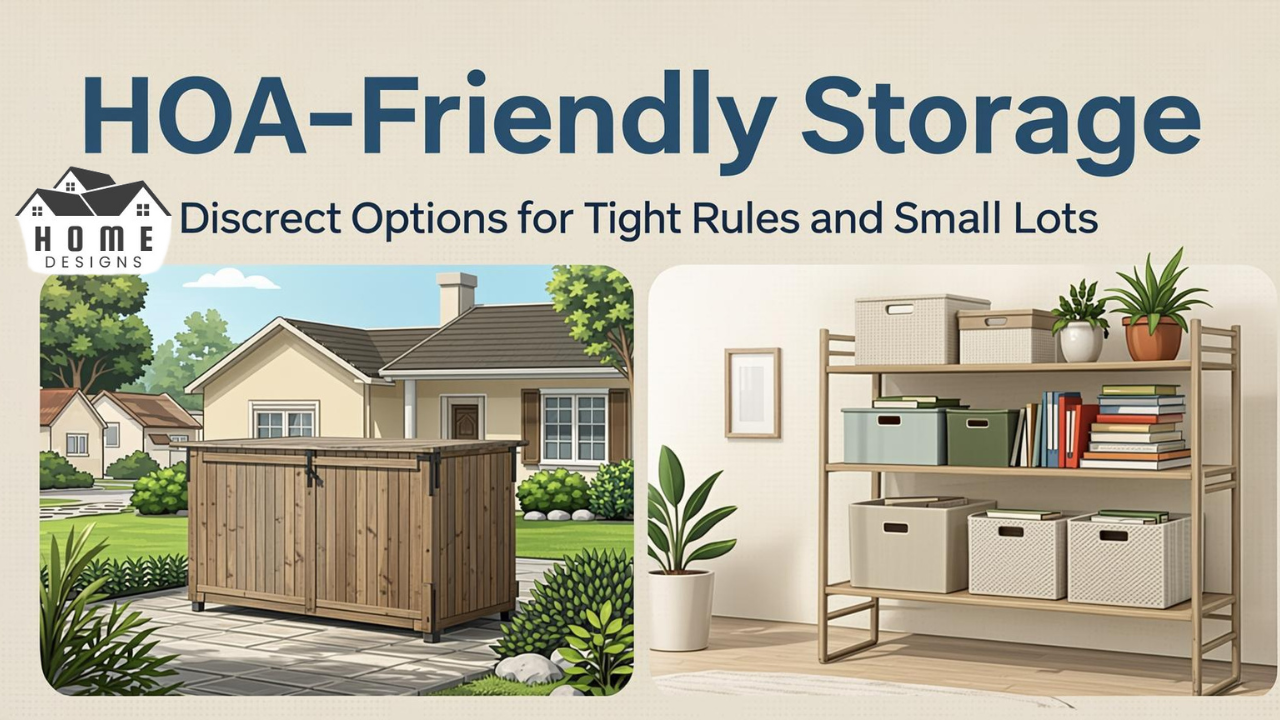
For homeowners living in communities governed by homeowners’ associations (HOAs), maintaining a neat and uniform appearance is part of the deal. But those same rules that keep your neighborhood tidy can make adding extra storage a real challenge. Between size restrictions, placement limits, and aesthetic guidelines, finding practical, compliant storage solutions can be a puzzle. HOA-friendly storage
The good news? With some creativity and planning, you can expand your storage space discreetly—without drawing the ire of your HOA or sacrificing curb appeal. Here are smart, attractive, and rule-friendly storage ideas that fit beautifully into small lots and strict communities.
Table of Contents
ToggleUnderstanding HOA Storage Restrictions
Before you invest in any storage solution, review your HOA’s guidelines. Typical restrictions address a few key areas:
- Visible structures: Many HOAs prohibit freestanding sheds that can be seen from the street or neighboring yards.
- Material and color rules: Storage structures often need to match the home’s architecture or color palette.
- Height and footprint limits: To maintain community uniformity, some associations restrict overall shed dimensions.
- Placement restrictions: You may need to keep storage units a certain distance from fences, property lines, or utility areas.
Understanding these rules saves you both time and money—ensuring that whatever solution you choose won’t be flagged in the next HOA inspection.
Blending Storage Into Your Landscape
One effective strategy for HOA compliance is to make your storage look like a natural extension of your property. Instead of thinking of it as “extra space,” treat it like an intentional design element.
- Integrated landscaping: Tuck storage behind shrubs, trellises, or decorative fencing that matches your backyard’s design. This softens visibility and adds character to your yard.
- Paint coordination: Match the color and trim of any storage unit to your home’s exterior. This simple approach instantly makes it blend in rather than stand out.
- Multi-functional spaces: Combine your storage with a seating area, planter, or even a vertical garden. When storage functions double as decor, HOAs are often more lenient.
These ideas not only hide storage areas but also elevate your home’s aesthetic value.
Discreet Storage Options That Work
When space is limited and rules are strict, compact and flexible storage ideas shine. Here are several tried-and-true designs suited for smaller lots:
1. Deck Boxes and Benches
Perfect for patios or small backyards, deck boxes and storage benches serve dual purposes—providing extra seating while keeping garden tools, pool toys, or cushions out of sight. They’re low-profile, mobile, and rarely face HOA objections.
2. Vertical Cabinets
If you’re tight on ground space, consider tall, slim storage cabinets. These mimic outdoor lockers, fit neatly against walls or fences, and can be disguised with garden decor. Choose weather-resistant finishes in muted tones to keep them visually subtle.
3. Under-Deck Storage
Make use of overlooked spaces beneath an elevated patio or deck. Rolling drawers or waterproof containers can hold seasonal gear, freeing up garage space without altering the property’s appearance.
4. Mini Sheds and Hideaway Units
When your HOA allows small outdoor structures, opt for mini sheds built with clean lines and neutral tones. Some models resemble outdoor closets or cabinets rather than traditional sheds—perfect for meeting aesthetic requirements in sensitive neighborhoods. For DIY enthusiasts, easy-to-assemble shed kits make installation straightforward and cost-effective without compromising appearance.
5. Concealed Storage Walls
Install storage along privacy walls or fences using hidden doors or panels. This method keeps tools and supplies protected while maintaining a sleek boundary line.
Creative Hidden Storage Ideas
Even within tight HOA limits, you can think beyond traditional structures. Hidden storage can be both clever and stylish with these subtle approaches:
- Built-in Planter Boxes: Hollow-out bases for storing hoses, gardening gloves, or outdoor games.
- Outdoor Furniture with Lift-Up Lids: Coffee tables or ottomans designed for outdoor use can discreetly double as storage.
- Camouflaged Utility Sheds: Use faux wood panels or lattice covers to disguise small sheds as part of your garden design.
- Raised Beds with Storage Compartments: Perfect for gardeners who need to stash tools right where they work.
These innovative solutions maximize both function and visual harmony—two ingredients HOAs appreciate.
Materials That Win HOA Approval
The secret to keeping your HOA happy often lies in material choices. Look for storage solutions made from durable, neutral materials that age gracefully and resist weathering:
- Resin and composite plastics: Low maintenance, neutral tones, and modern finishes that blend well with most homes.
- Wood-look panels: Composite materials with wood texture offer charm without the upkeep of traditional timber.
- Metal with powder coating: Ideal for sleek, architectural homes where minimalist style rules.
Whenever possible, choose nonreflective finishes and subtle colors—think taupe, sand, or slate—to harmonize with your home’s exterior palette.
Planning for Long-Term Value
When selecting or building HOA-friendly storage, remember that longevity and compliance go hand in hand. Regular maintenance—like cleaning, repainting, or resealing—keeps your setup looking intentional rather than improvised.
If you plan to sell your home, these discreet storage solutions can become a selling point. Future buyers appreciate both the functionality and clean aesthetics, especially when outdoor storage doesn’t violate neighborhood rules.
Living under HOA restrictions doesn’t mean you have to sacrifice practicality or creativity. Thoughtful, discreet storage can enhance your property, keeping everything—from tools to patio gear—organized and out of sight. By blending clever design, compliant materials, and a good understanding of your HOA’s policies, you can enjoy the best of both worlds: neat, accessible storage and a community that stays beautifully uniform.
With a bit of planning, even the smallest lots can gain big functionality—no rule-breaking required.