It’s almost predictable. The garage door starts acting strange on the one morning you can’t afford a delay. It pauses mid-lift, drags along the track with a rough sound, or lands harder than it used to. You notice it, but not for long. Maybe the weather shifted. Maybe it’s just getting older. You pull out of the driveway and put it out of mind.
Still, these doors don’t usually fail without leaving clues. The hints are quiet: a new vibration, a slower climb, a slight tilt as it moves. Nothing dramatic. That’s why it gets ignored. By the time it won’t open at all, those small warnings have been repeating themselves for weeks.
Table of Contents
ToggleThe Sounds and Movements You Shouldn’t Ignore
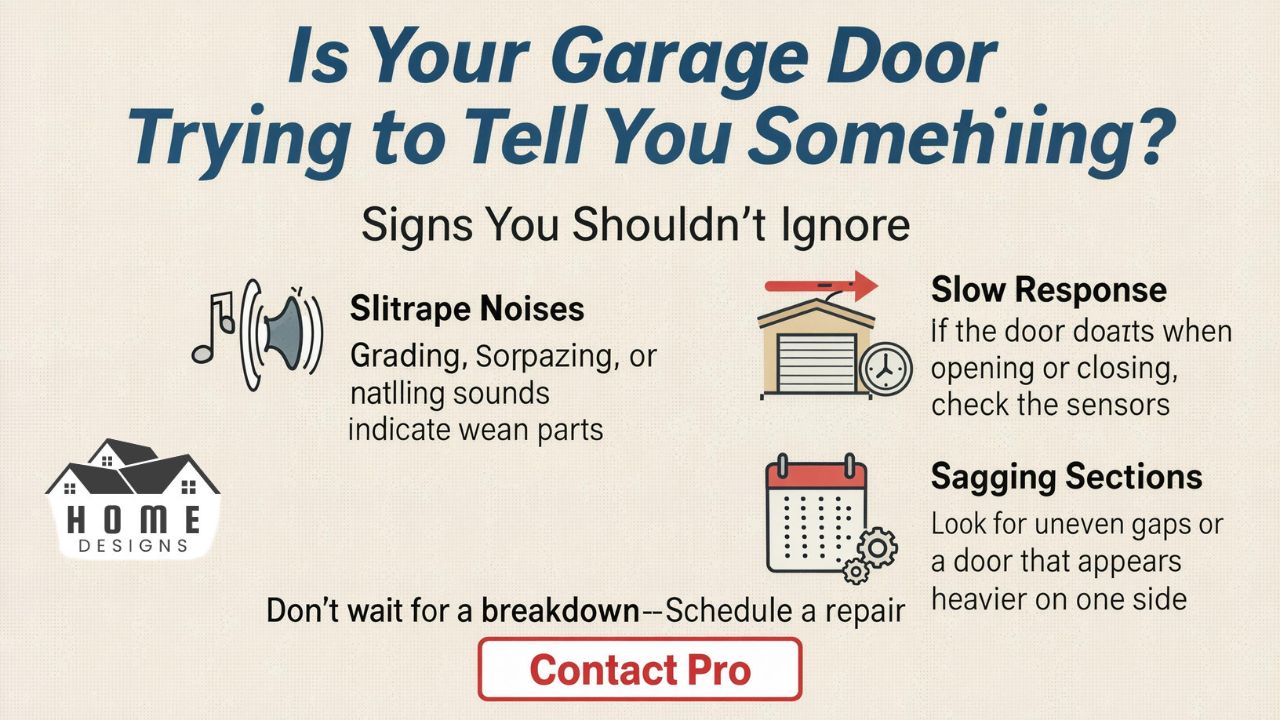
A garage door isn’t meant to be silent, but it should sound consistent from start to finish. When new noises creep in, like metal scraping, small pops, or a loose rattle, it usually means parts inside are wearing down. Rollers flatten. Tracks bend slightly. Springs stretch past their prime. None of that fixes itself with time.
Pay attention to how it moves, too. If the door shakes, pulls to one side, or feels heavier than before, the balance is off. That strain shifts to the opener and motor. People adapt to gradual changes. But steady wear, even when it seems minor, keeps building underneath.
When Small Issues Point to Bigger Repair Needs
Most problems begin quietly. A bracket loosens. A hinge bends slightly. Weather seals dry out and crack. None of it feels urgent at first. The door still opens. It still closes. Life moves on.
The risk is not the minor flaw itself. It’s the strain that flaw creates across the whole system. If you notice something isn’t right, you should immediately turn to a professional for garage door repair before the problem escalates into a full breakdown.
Garage doors are heavy, sometimes weighing over a hundred pounds. They depend on tension and alignment to move safely. When one part is off, pressure shifts elsewhere. Springs stretch harder. Cables pull unevenly. Tracks absorb stress they weren’t designed to carry. Over time, that imbalance builds. A door that once felt light becomes stubborn. The opener works louder. Energy use increases slightly, though most people don’t connect the dots. The right professionals would know exactly where to look. Addressing early signs keeps the system stable and reduces the chance of sudden failure.
The Door That Moves Too Fast
Not all trouble announces itself with grinding or bangs. Sometimes it shows up as speed. If the door seems to rush downward instead of easing into place, the tension system may be wearing out. Springs are built to carry most of the weight. When they weaken, gravity does more of the work than it should. The door might still lift without complaint, which makes the change easy to overlook. But a hard, fast close isn’t harmless. Sensors near the floor can drift out of alignment or gather dust. Wires loosen. Relying on automation alone can be risky. Noticing it early makes a difference.
Remote Delays and Wall Switch Hesitation
Garage door openers are built for convenience, but that convenience comes with more parts that can fail. When you press the remote and nothing happens, dead batteries seem like the obvious answer. Sometimes that’s all it is. Other times, the pause hints at something deeper.
If there’s a delay between the click and the movement, the opener and motor may not be communicating well. The motor itself could be under strain. When the wall switch shows the same hesitation, the problem likely isn’t the remote. These systems are meant to respond smoothly. Consistent lag usually signals wear, not coincidence.
Weather and Wear Add Up
A garage door stands at the front line of the house, taking whatever the weather brings. Weeks of heat, thick humidity, sudden freezes, pounding rain; it all lands there first. Metal swells and then contracts. Lubrication thins out. The bottom seal stiffens and slowly pulls away.
Inside the home, maintenance feels more urgent and visible. Outside, the door keeps cycling up and down, absorbing strain each time. You might notice a sliver of light underneath or a slight draft along the frame. It seems minor. Still, those gaps allow moisture, pests, and energy loss. Small weaknesses, when ignored, don’t usually stay small for long.
The Visual Clues Most People Miss
Stand back and look at your garage door when it’s closed. Is it level? Do the panels sit evenly? Are there visible cracks or dents along the surface?
Cosmetic damage can sometimes be just that. But dents may affect alignment. Warped panels may stress hinges and tracks. What appears minor from the driveway can translate into strain within the mechanism.
It’s also worth glancing at the cables on either side. They should be taut and evenly wound. Fraying or slack is a sign that tension is uneven. That’s not a do-it-yourself adjustment. The stored energy in springs and cables can be dangerous if handled incorrectly.
A lot of homeowners wait because the door technically still opens and closes. It hasn’t forced their hand yet. That’s human nature. But these systems carry heavy tension every day. When something snaps without warning, it’s more than inconvenient. Wear builds slowly. Catching it early prevents bigger trouble.