Most homeowners think a porch is just a porch. You pick a size, choose some materials, and the crew gets to work. But talk to any experienced contractor who has done this for years, and they will tell you something different.
A front porch and a back porch are two completely separate projects. The planning is different, the permits are different, and honestly, even the first conversation with a builder goes in a different direction depending on which one you want.
This article breaks down what actually changes when builders take on each type, so you know exactly what to expect before any shovels hit the ground.
Two Porches, Two Jobs: Understanding the Core Difference
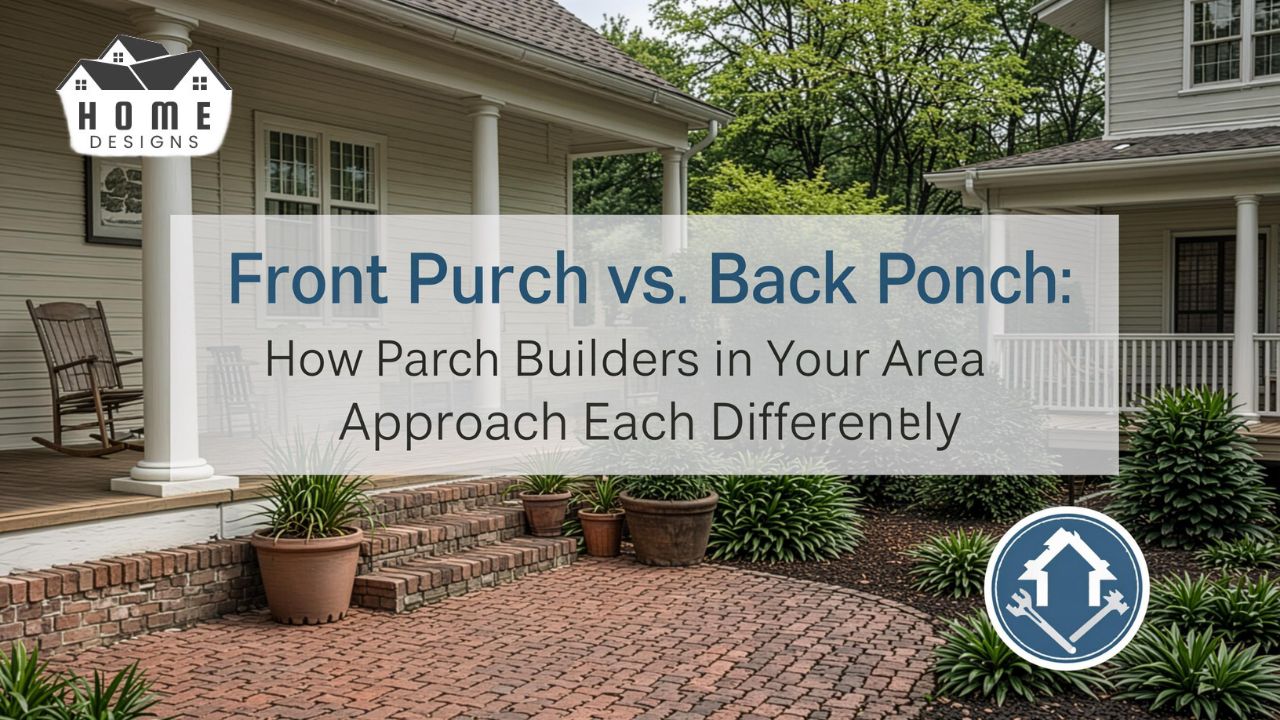
Here is the simplest way to think about it. A front porch faces the street. It is public. Anyone walking by sees it, and that changes everything about how it needs to be designed and built. A back porch faces your yard. It is yours. The rules are more relaxed, the design options open up, and the focus shifts from “how does this look from the street” to “how does this actually work for my family.”
That difference sounds simple on paper, but it ripples through every decision. Material selection, footprint, roofline, railing style, drainage, and foundation type: builders make different calls on all of these depending on which side of the house they are working on. If a contractor pitches you the same plan for both, that is a red flag.
How Local Porch Builders Design the Front Porch Differently
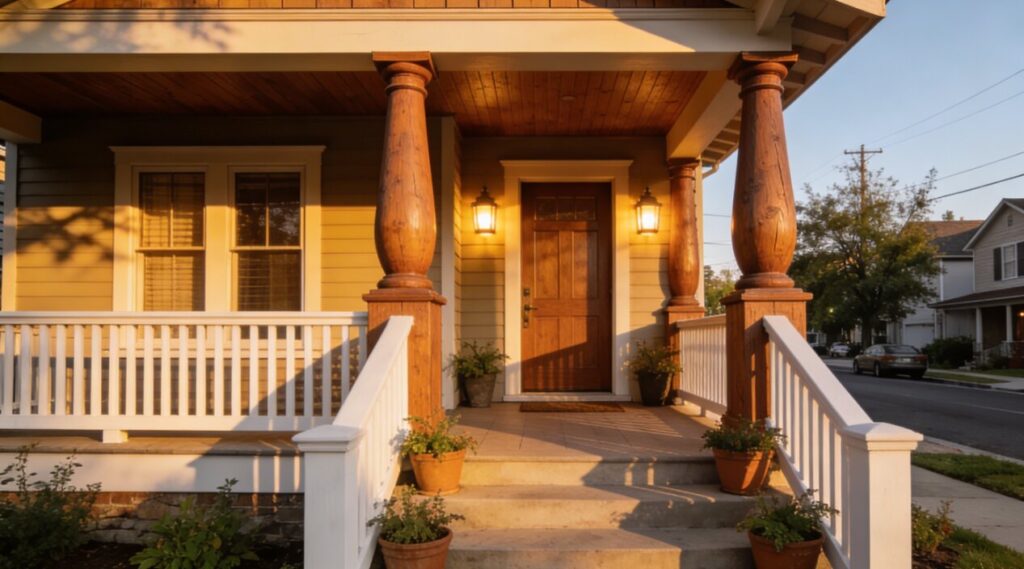
Front porches live at the intersection of architecture and neighborhood standards. Builders start by studying the house itself: the roofline, facade style, column placement, siding, and trim. Everything on the front porch has to feel like it was always there. A craftsman-style home gets tapered columns and wide steps. A colonial gets symmetrical railings and classic painted wood. It is not just personal preference; it is about visual cohesion.
Then come the setbacks. In most municipalities, there are strict rules about how close any structure can get to the property line or sidewalk. Front yards almost always have tighter setback requirements than backyards. This limits how deep a front porch can be, and builders need to know local codes cold before they even draft an initial layout.
HOA restrictions add another layer. If your neighborhood has an HOA, there is a decent chance it has rules specifically about what front-facing additions can look like: color palette, column style, roofing material, and sometimes even the type of railing. Builders who work locally know these rules by heart. That saves you from designing something you love, only to find out it will not get approved.
Lighting also matters more on a front porch. Entry lighting is both functional and aesthetic, and good builders factor in electrical placement early in the design phase, not as an afterthought.
What Changes When Builders Work on the Back Porch
The back porch is where builders get more creative flexibility, and where homeowners usually get more of what they actually want.
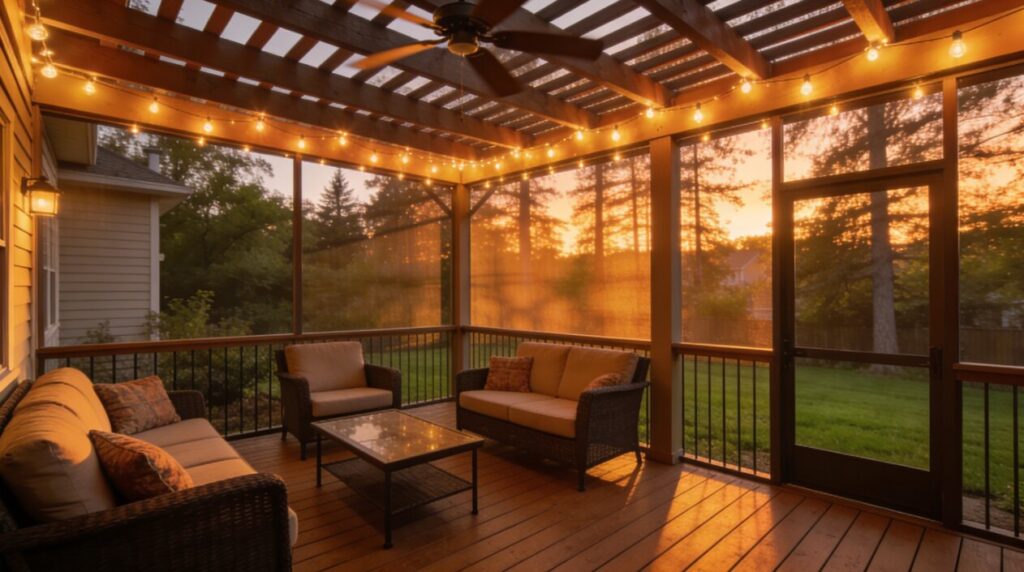
Size is the first thing. Back porches can often go larger because rear setbacks are more generous, and there is no aesthetic standard to meet for the neighborhood. A 12×16 open porch can become a 20×24 screened room with a ceiling fan and outdoor kitchen hookup. That kind of expansion rarely works on the front.
From a technical standpoint, drainage becomes a bigger conversation. Backyard terrain is often uneven, sloped toward the house, or prone to pooling after heavy rain. Good builders check the grade before anything else. A porch that does not account for water flow is going to have foundation problems within a few years.
Back porches also connect to more things: the yard, a deck, a pool, or a patio. Builders approach these projects thinking about transitions, how the porch flows into adjacent spaces, whether there is a need for steps or a landing, and how the structure sits relative to existing landscaping.
Privacy considerations come into play, too. Depending on lot size and neighboring home placement, builders may recommend specific orientations, privacy screens, or roof extensions to block sightlines from second-story windows next door.
Materials: Same Options, Different Priorities
The material palette is largely the same for both porch types, but priorities shift depending on which side of the house you are building on.
Front porch priorities:
- Floor covering: composite, painted wood, or tile for a polished look
- Railing style: decorative and code-compliant, matched to the home’s architecture
- Roof type: designed to follow the existing roofline of the house
- Screening: rarely used on the front
- Overall priority: appearance and curb appeal come first
Back porch priorities:
- Floor covering: composite, pressure-treated wood, or concrete for heavy use
- Railing style: practical and minimal, or skipped entirely depending on height
- Roof type: flexible, ranging from a simple pergola to a full enclosed roof or canopy
- Screening: very common, especially in warmer or bug-heavy climates
- Overall priority: durability and function win over looks
Front porch materials are chosen with visual impact in mind first. If painted wood fits the house, builders go with that even if composite would need less upkeep, because it looks right. On the back, the priority flips. Homeowners want something that holds up to heavy use, weather, and the occasional spilled grill sauce.
Permits and Codes: Why Location on the House Matters
Both types require permits in most areas, but the front porch process is almost always more involved. In addition to standard structural and zoning permits, front additions sometimes require a separate architectural review, especially in older neighborhoods or historic districts.
Back porch permits tend to move faster. That said, larger enclosed structures like screened rooms or three-season porches almost always trigger additional requirements regardless of placement. Skipping the permit process to save time is one of the most common and costly mistakes homeowners make.
This is exactly why working with porch builders in my area matters. Local contractors know which municipality requires what, who to call at the permit office, and how long approvals typically take. That knowledge alone can save weeks on your project timeline.
Cost Differences Builders Will Tell You Upfront
Front porches are usually smaller in footprint, but they cost more per square foot. The reason is the detailed work. Columns, trim, railings, and entry lighting all require more precision and better-looking finishes. You are paying for something that has to look polished from the street.
Back porches tend to cost more overall, mostly because of size and added features. A screened enclosure adds cost. An outdoor kitchen rough-in adds cost. Composite decking over a concrete slab adds cost. The base structure might be less ornate, but the total project scope usually runs higher.
A few things that push prices up on either type:
- 🟢 Sloped or uneven terrain requiring extra foundation work.
- 🟢 Electrical installation for lighting, fans, or outlets.
- 🟢 Structural changes to the home’s existing framing.
- 🟢 Custom features like built-in benches or storage.
- 🟢 Material upgrades like hardwood or premium composite.
The smartest move is to get separate estimates for each project type and treat them independently. Experienced porch builders will quote them differently because, simply put, they are different projects.
How to Choose, or Why Some Homeowners Build Both
If you are purely after curb appeal and a place to sit near the front of the house, the front porch is your answer. If you want space to actually live outside, host dinners, and keep the world at a distance, go back.
A lot of homeowners do both, just not at the same time. Phased construction lets you prioritize one now and add the other when the budget allows. Builders can even design them with a future connection in mind. A wraparound porch, for example, can tie both sides together down the road.
Think about how you actually spend time outside. That usually makes the choice obvious.
Ready to Start Planning?
Not every contractor thinks about a front porch and a back porch as distinct projects, but the ones who do will ask better questions, catch problems early, and build something that actually fits your home. Get a few local quotes, ask specifically how they handle permits and site grading, and do not settle for a one-size-fits-all pitch. The right builder will treat these two projects exactly as they are: different jobs that both deserve proper attention.