Table of Contents
ToggleIntroduction
If there’s one thing that can completely transform your cooking space, it’s kitchen cabinets. They’re not just boxes on your walls—they define your kitchen’s style, functionality, and even how you feel when you walk into the room.
Think about it: whether you’re brewing your morning coffee or hosting a family dinner, your cabinets are always part of the experience. The right choice can make your kitchen feel warm, organized, and inviting. The wrong one? Cluttered, outdated, and frustrating.
In reality, choosing the perfect cabinets isn’t just about looks. It’s about balancing durability, storage, budget, and design trends—all while making sure it feels like you. That’s exactly what this guide will help you do.
Understanding Kitchen Cabinets
At their core, kitchen cabinets are built-in furniture designed to store food, utensils, cookware, and appliances. But modern cabinetry goes far beyond basic storage.
What Makes Cabinets So Important?
- They take up 40–50% of visual space in most kitchens
- They directly impact organization and workflow
- They influence home resale value
In fact, according to remodeling data, upgrading cabinets can yield a return on investment of up to 70%.
Basic Components of Cabinets
- Box (Carcass): The main structure
- Doors & Drawer Fronts: The visible face
- Hardware: Handles, knobs, hinges
- Shelving: Fixed or adjustable storage
Types of Kitchen Cabinets
When selecting kitchen cabinets, understanding the main types can save you both money and headaches later.
Stock Cabinets
These are pre-manufactured in standard sizes.
Pros:
- Affordable
- Quick availability
Cons:
- Limited design options
- Less flexibility
Semi-Custom Cabinets
A middle ground between stock and custom.
Pros:
- More design flexibility
- Better materials
Cons:
- Higher cost than stock
Custom Cabinets
Built specifically for your space.
Pros:
- Fully personalized
- Premium quality
Cons:
- Expensive
- Longer lead times
Materials Used in Kitchen Cabinets
The material you choose affects durability, cost, and aesthetics.
Solid Wood
- Oak, maple, cherry are popular
- Long-lasting and classic
Plywood
- Strong and moisture-resistant
- Often used for cabinet boxes
MDF (Medium Density Fiberboard)
- Smooth finish, great for painted cabinets
- Less resistant to moisture
Particleboard
- Budget-friendly
- Not as durable
Quick Comparison Table
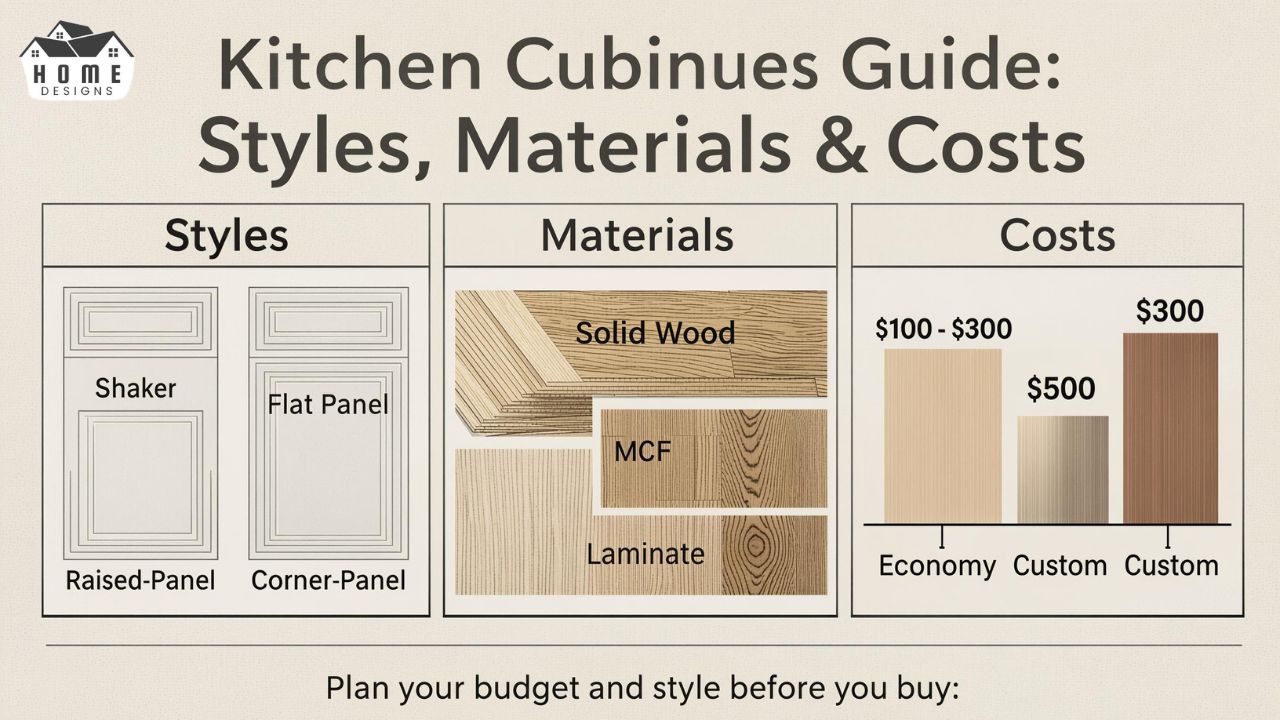
| Material | Durability | Cost Level | Best For |
|---|---|---|---|
| Solid Wood | High | High | Premium kitchens |
| Plywood | High | Medium | Long-term durability |
| MDF | Medium | Medium | Painted finishes |
| Particleboard | Low | Low | Budget projects |
Popular Kitchen Cabinet Styles
Style defines the personality of your kitchen.
Shaker Style
- Clean lines
- Minimalist look
- Extremely popular
Flat-Panel (Slab)
- Modern and sleek
- No detailing
Raised Panel
- Traditional
- More decorative
Glass-Front Cabinets
- Showcase items
- Adds visual depth
Open Shelving
- Trendy and airy
- Requires neat organization
Cabinet Finishes and Colors
Choosing the right finish can completely change the mood of your kitchen.
Popular Finishes
- Painted: Clean and modern
- Stained: Highlights wood grain
- Glazed: Adds depth and texture
Trending Colors
- White (timeless classic)
- Navy blue (bold yet elegant)
- Matte black (modern luxury)
- Natural wood tones (warm and organic)
That said, trends come and go—but functionality and personal taste should always come first.
Storage Solutions and Smart Features
Modern kitchen cabinets are smarter than ever.
Must-Have Storage Features
- Pull-out shelves
- Lazy Susans
- Deep drawers for pots
- Built-in spice racks
- Hidden trash bins
Why Smart Storage Matters
Imagine reaching everything without bending or digging through clutter. It’s not just convenient—it saves time and reduces stress.
Cost of Kitchen Cabinets
Budget is often the biggest deciding factor.
Average Cost Breakdown
| Cabinet Type | Cost Range (USD) |
|---|---|
| Stock | $60 – $200 per unit |
| Semi-Custom | $100 – $650 per unit |
| Custom | $500 – $1,200+ |
What Affects Cost?
- Material quality
- Size of kitchen
- Hardware and finishes
- Installation charges
In reality, cabinets can take up 30–40% of your total kitchen renovation budget.
Installation: DIY vs Professional
DIY Installation
Pros:
- Saves money
- Sense of accomplishment
Cons:
- Time-consuming
- Risk of mistakes
Professional Installation
Pros:
- Precision and efficiency
- Warranty protection
Cons:
- Higher cost
If your kitchen layout is complex, hiring a professional is usually worth it.
Maintenance and Care Tips
Even the best kitchen cabinets need proper care.
Daily Care
- Wipe with a soft cloth
- Avoid harsh chemicals
Long-Term Maintenance
- Tighten hinges regularly
- Refinish surfaces when needed
- Keep away from excessive moisture
A little care can extend cabinet life by 10–15 years.
Personal Background: The Cabinet Industry Perspective
To truly understand kitchen cabinets, it helps to look at the people behind them.
Career Journey in Cabinetry
Most cabinet makers start as carpenters or woodworkers. Over time, they specialize in design, precision cutting, and finishing techniques.
Industry Achievements
- Growth of modular kitchens worldwide
- Adoption of eco-friendly materials
- Integration of smart storage technology
Financial Insights
The cabinetry industry is worth billions globally, with custom cabinet makers often earning premium rates due to craftsmanship and demand.
FAQ Section
Frequently Asked Questions
What are the best materials for kitchen cabinets?
Solid wood and plywood are considered the most durable options, while MDF works well for painted finishes.
How long do kitchen cabinets last?
With proper care, cabinets can last 15–50 years depending on material and usage.
Are custom cabinets worth the investment?
Yes, especially if you want a perfect fit and unique design, but they come at a higher cost.
What is the most popular cabinet style?
Shaker-style cabinets remain the most popular due to their versatility.
How can I make my cabinets look modern?
Use flat-panel doors, minimal hardware, and neutral or bold colors like black or navy.
Can I repaint old cabinets?
Absolutely. Repainting is a cost-effective way to refresh your kitchen.
How do I choose cabinet color?
Consider lighting, kitchen size, and overall theme. Lighter colors make spaces feel larger.
What is the cheapest way to upgrade cabinets?
Refacing or repainting existing cabinets instead of replacing them.
Conclusion
Choosing the right kitchen cabinets isn’t just a design decision—it’s a lifestyle upgrade. From materials and styles to storage and cost, every detail plays a role in shaping your kitchen experience.
Take your time, explore your options, and think about how you actually use your space day-to-day. Because in the end, the best kitchen isn’t the most expensive one—it’s the one that works beautifully for you.