Introduction
There’s something quietly powerful about a small cottage—a space that feels less like a house and more like a personal retreat. It’s not about square footage; it’s about how a place makes you feel when you walk through the door.
In a world where bigger often seems better, more people are stepping back and choosing simplicity. A small cottage represents freedom from excess, lower costs, and a lifestyle that prioritizes comfort over clutter.
Whether you’re dreaming of a countryside escape, a budget-friendly home, or a minimalist lifestyle, this guide breaks down everything you need to know—from design ideas to real-world costs and practical living tips.
Why a Small Cottage Is Gaining Popularity
The shift toward smaller homes isn’t random—it’s driven by real, practical reasons.
People are increasingly choosing a small cottage because it aligns with modern needs:
- Lower construction and maintenance costs
- Easier cleaning and upkeep
- Energy efficiency
- Simpler, less stressful lifestyle
- Flexibility for rural or urban living
This isn’t just a trend—it’s a correction to years of overconsumption.
What Defines a Small Cottage?
A small cottage is typically a compact, cozy home ranging from 300 to 1,200 square feet. But size alone doesn’t define it—character does.
Key Characteristics
- Warm, inviting interiors
- Efficient use of space
- Natural materials like wood or stone
- Often located in rural or semi-rural settings
- Strong connection to nature
Unlike modern box-style homes, cottages emphasize charm, personality, and functionality.
Smart Design Ideas for a Small Cottage
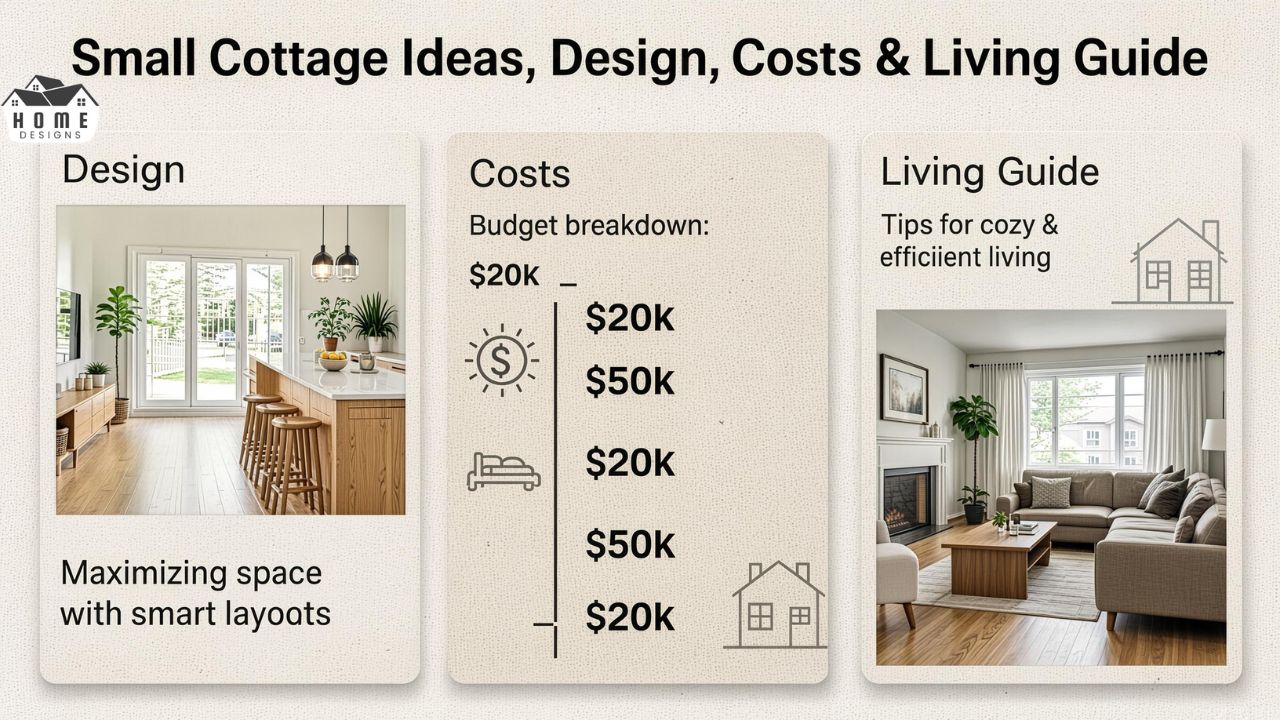
Designing a small cottage isn’t about squeezing things in—it’s about making space feel bigger than it is.
Open Layout Concepts
Walls are your enemy in small spaces.
- Combine kitchen, dining, and living areas
- Use furniture to define zones
- Keep pathways clear
Vertical Space Utilization
Think upward, not outward.
- Install shelves up to the ceiling
- Use loft beds
- Add hanging storage


Multi-Functional Furniture
Every item should earn its place.
- Sofa beds
- Foldable dining tables
- Storage ottomans
This is where most people fail—they fill a small cottage with unnecessary furniture and kill the entire concept.
Building vs Buying a Small Cottage
This is where you need to be realistic. Romantic ideas don’t pay bills—numbers do.
Building a Small Cottage
Pros:
- Full customization
- Better material control
- Long-term cost efficiency
Cons:
- Time-consuming
- Requires land
- Unexpected costs
Average cost range:
- $20,000 – $100,000+ depending on size and location
Buying a Small Cottage
Pros:
- Immediate move-in
- Established infrastructure
- Easier financing
Cons:
- Limited customization
- Possible repair costs
If you’re not experienced, building can quickly turn into a financial mess. Buying is safer for most people.
Interior Styling That Works in a Small Cottage
A small cottage isn’t just about structure—it’s about atmosphere.
Color Choices
- Light tones create openness
- Neutral palettes reduce visual clutter
- Soft pastels add warmth
Lighting Strategy
- Maximize natural light
- Use layered lighting (ambient + task + accent)
- Avoid bulky fixtures
Textures and Materials
- Wood for warmth
- Linen for softness
- Stone for authenticity

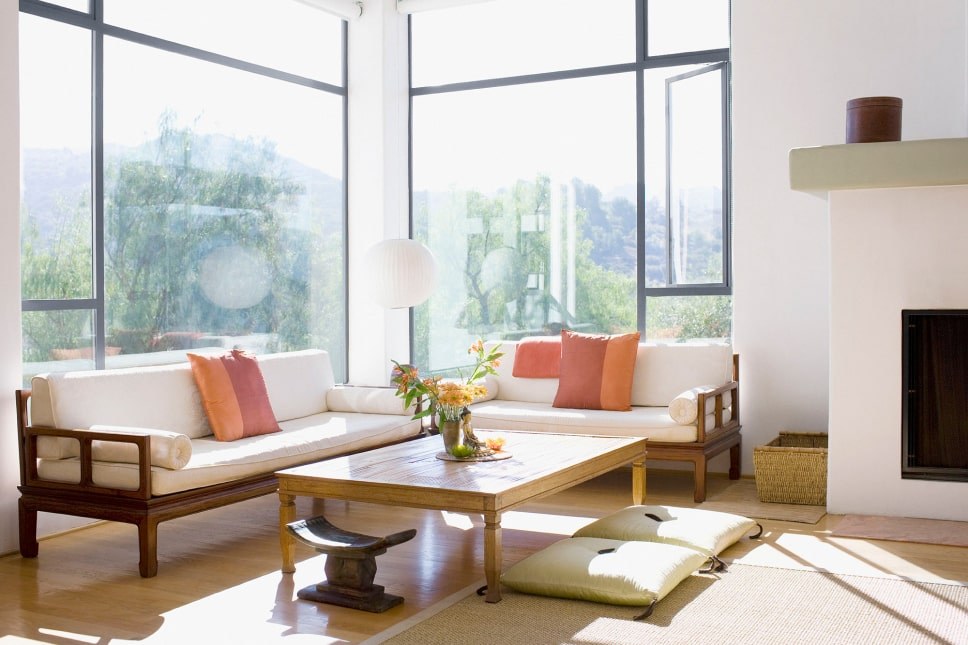

The goal is simple: make the space feel alive, not cramped.
Cost Breakdown of Living in a Small Cottage
Let’s strip away the fantasy and talk real numbers.
Monthly Expenses
- Utilities: 30–50% lower than standard homes
- Maintenance: Minimal
- Property taxes: Lower (depending on location)
Hidden Costs People Ignore
- Land purchase
- Utility connections
- Insulation upgrades
- Furniture customization
A small cottage is cheaper—but only if you plan properly. Poor planning wipes out all savings.
Best Locations for a Small Cottage Lifestyle
Location can make or break your experience.
Rural Areas
- Peaceful environment
- Lower land costs
- Ideal for nature-focused living
Suburban Zones
- Balanced lifestyle
- Access to amenities
- Moderate pricing
Urban Edge
- Higher cost
- Limited space
- Still possible with smart design

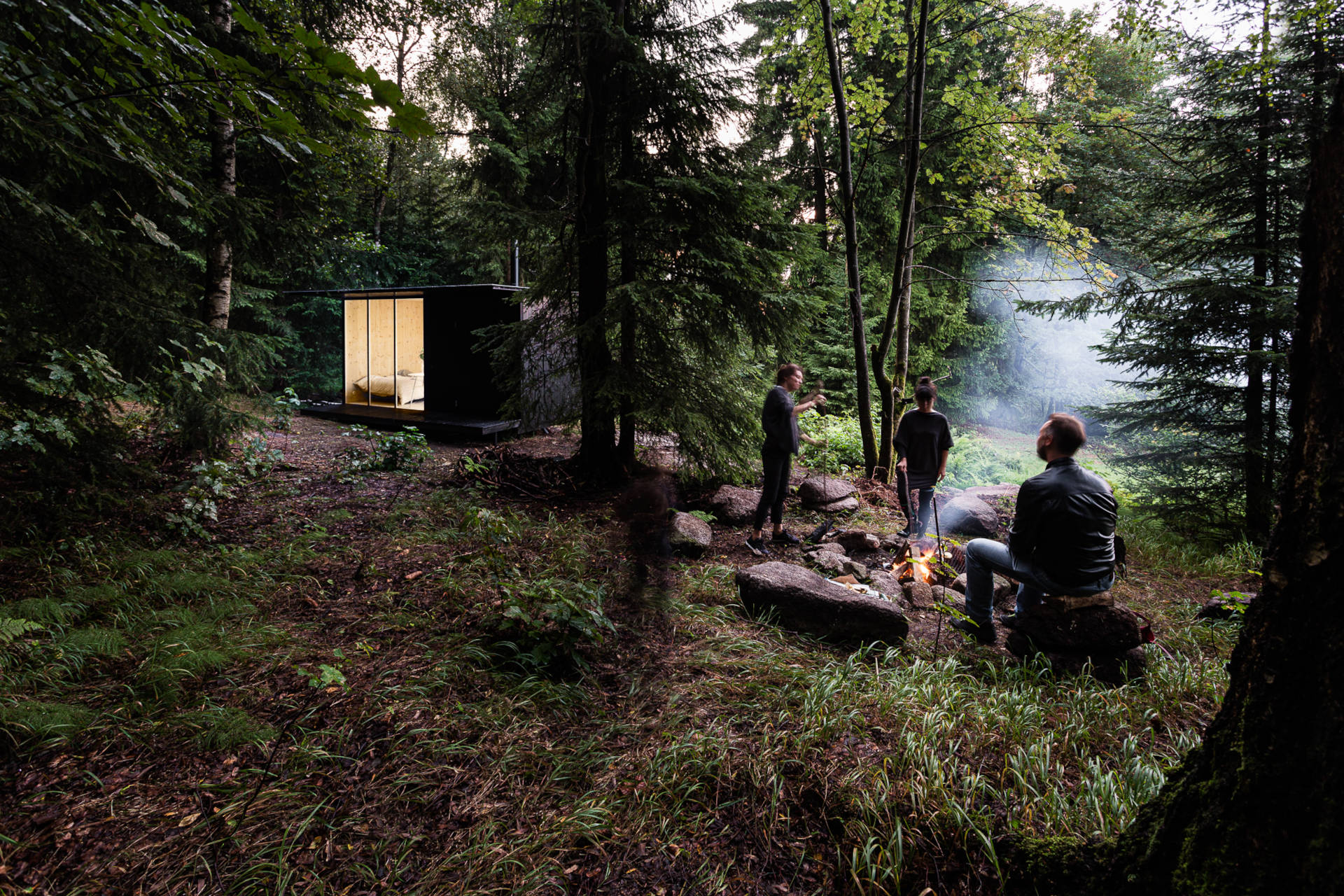

Most people romanticize rural living—but forget about internet, healthcare access, and commute. Think before you commit.
Pros and Cons of Choosing a Small Cottage
Advantages
- Financial freedom
- Less clutter
- Easier maintenance
- Eco-friendly lifestyle
Disadvantages
- Limited storage
- Not ideal for large families
- Resale challenges in some markets
The biggest mistake? Assuming small means easy. It requires discipline and smart living.
Small Cottage Living Tips That Actually Work
This is where theory meets reality.
Declutter Aggressively
If you don’t need it, get rid of it.
Stick to Essentials
Every item must serve a purpose.
Plan Storage Before Buying Furniture
Most people do this backward—and regret it.
Think Long-Term
Design for how you’ll live in 5–10 years, not just today.
A small cottage rewards smart thinking and punishes impulsive decisions.
Common Mistakes to Avoid
Let’s be blunt—these mistakes destroy the entire experience:
- Overfilling the space
- Ignoring ventilation
- Choosing aesthetics over function
- Underestimating storage needs
- Poor layout planning
If you avoid these, you’re already ahead of 80% of people.
FAQ
What is the ideal size for a small cottage?
Typically between 500 and 1,000 square feet, depending on lifestyle needs and occupancy.
Is a small cottage cheaper to maintain?
Yes, significantly—lower utilities, repairs, and overall upkeep.
Can a small cottage work for families?
It can, but only with efficient design and strict space management.
How long does it take to build a small cottage?
Usually 3 to 9 months, depending on complexity and resources.
Is a small cottage a good investment?
It can be, especially in rental markets or vacation locations.
What materials are best for building a small cottage?
Wood, stone, and eco-friendly composites are popular choices.
Can I build a small cottage on a budget?
Yes, but only with strict cost control and realistic expectations.
Are small cottages eco-friendly?
Generally yes—they use fewer resources and consume less energy.
Conclusion
A small cottage isn’t just a housing option—it’s a lifestyle decision. It forces you to prioritize what actually matters and eliminate what doesn’t.
But don’t confuse simplicity with ease. Done right, it’s efficient, affordable, and deeply satisfying. Done wrong, it becomes cramped, frustrating, and limiting.
The difference comes down to planning, discipline, and smart design choices. If you approach it strategically, a small cottage can deliver more value per square foot than most oversized homes ever will.