
Georgetown, Texas homeowners know the drill: triple-digit summers that stretch from May through September, sudden cold snaps in winter, and humidity that can make even mild days feel oppressive. Your HVAC system isn’t just a convenience in this climate—it’s essential infrastructure that determines whether your home remains livable or becomes a liability.
The challenge isn’t simply surviving extreme weather. It’s maintaining consistent comfort while managing energy costs that can spike dramatically during peak seasons. A well-maintained system handles both heating and cooling efficiently, adapts to Georgetown’s specific climate patterns, and prevents the kind of mid-summer breakdowns that leave families scrambling for emergency repairs.
Table of Contents
ToggleUnderstanding Georgetown’s Climate Demands
Central Texas weather puts unique stress on residential HVAC systems. According to National Weather Service data, Georgetown experiences approximately 110 days above 90°F annually, with summer peaks regularly exceeding 100°F. Winter temperatures, while generally mild, can drop below freezing during cold fronts, requiring systems that handle both extremes competently.
The climate creates several specific challenges:
- Extended cooling seasons: Air conditioning runs nearly eight months of the year, placing sustained demand on compressors and refrigerant systems
- Humidity fluctuations: Moisture levels vary significantly between seasons, affecting indoor air quality and requiring proper dehumidification capacity
- Temperature swings: Rapid weather changes demand systems that can switch efficiently between heating and cooling modes
- Dust and allergens: Central Texas allergens and airborne particles require robust filtration to maintain healthy indoor environments
These conditions mean that HVAC systems in Georgetown work harder and face more operational hours than equipment in milder climates. Selecting appropriately sized units with adequate SEER ratings and proper installation becomes critical for long-term performance.
Selecting Quality Air Conditioning Equipment
Not all air conditioning systems perform equally under Georgetown’s demanding conditions. The difference between adequate and excellent equipment becomes apparent during the first summer heat wave, when inferior systems struggle to maintain comfortable temperatures or drive utility bills to uncomfortable levels.
When evaluating air conditioning options, prioritize these factors:
- SEER ratings above 16: Higher Seasonal Energy Efficiency Ratio numbers translate directly to lower operating costs during extended cooling seasons
- Proper sizing calculations: Oversized units cycle inefficiently and fail to dehumidify properly; undersized systems run continuously without achieving target temperatures
- Two-stage or variable-speed compressors: These technologies adjust output to match demand rather than running at full capacity constantly
- Quality installation: Even premium equipment underperforms when installed incorrectly, with improper refrigerant charges and ductwork leaks undermining efficiency
- Noise considerations: Modern systems operate quietly, but decibel ratings vary significantly between models and affect livability
Smart thermostat integration has become standard in quality installations, allowing homeowners to optimize schedules and monitor performance remotely. These features provide both convenience and early warning when systems begin operating outside normal parameters.
If you are on the market for a new air conditioning system, check out this buyer’s guide.
Integrated Heating and Cooling Systems
Georgetown’s climate requires year-round HVAC capability, making integrated heating and cooling systems the practical choice for most homes. While heating demands remain modest compared to northern climates, winter cold snaps still require reliable warmth, and system efficiency matters across both heating and cooling modes.
Modern heat pump technology has transformed the economics of combined systems. These units provide both heating and cooling from a single outdoor compressor, operating more efficiently than traditional furnace-and-air-conditioner combinations in Central Texas’s mild winters. When outdoor temperatures drop below heat pump efficiency thresholds, supplemental electric or gas heat maintains comfort.
Benefits of quality integrated systems include:
- Consistent temperature control: Properly sized equipment maintains stable indoor conditions regardless of outdoor weather
- Energy efficiency: ENERGY STAR certified systems reduce utility costs by 20-40% compared to older equipment
- Improved air quality: Advanced filtration removes allergens, dust, and pollutants that affect respiratory health
- Property value: Updated HVAC systems represent significant selling points, with buyers increasingly prioritizing energy efficiency
The investment in quality equipment pays dividends through lower operating costs, fewer repairs, and enhanced comfort. Systems designed for Georgetown’s specific climate patterns outperform generic installations that don’t account for local conditions.
Essential Maintenance Practices
HVAC longevity depends more on consistent maintenance than on equipment brand or initial quality. Systems that receive regular professional service routinely operate efficiently for 15-20 years, while neglected equipment often fails within a decade despite higher initial costs.
Homeowners should implement these maintenance practices:
- Biannual professional inspections: Schedule service before cooling season begins in spring and before heating demands start in fall
- Monthly filter changes: Replace standard filters every 30 days during heavy use periods; high-efficiency filters may last 90 days but require monitoring
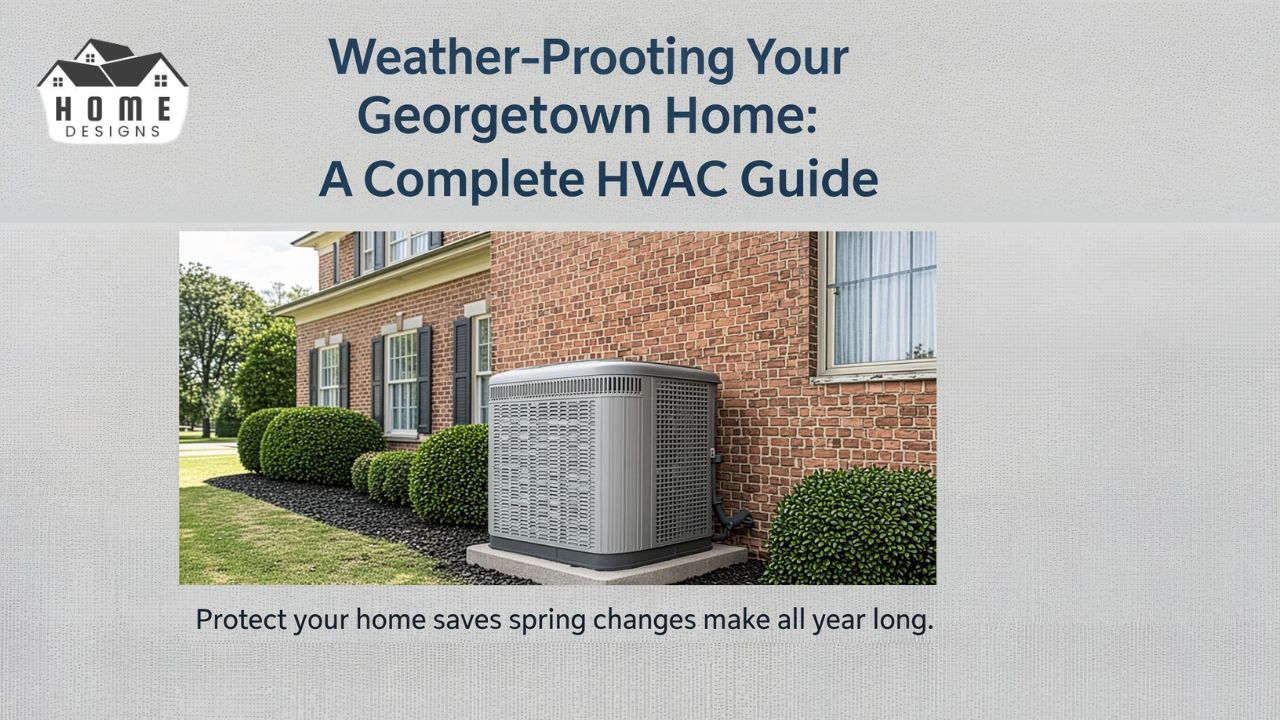
- Outdoor unit maintenance: Keep condensers clear of vegetation, debris, and obstructions that restrict airflow and reduce efficiency
- Ductwork inspection: Check accessible ducts annually for leaks, disconnections, and insulation damage that waste conditioned air
- Thermostat calibration: Verify temperature accuracy and replace batteries in programmable models to prevent setting losses
- Condensate drain clearing: Flush drain lines quarterly to prevent clogs that cause water damage and system shutdowns
Professional maintenance goes beyond simple filter changes. Technicians check refrigerant levels, test electrical connections, measure airflow, and identify developing problems before they cause failures. This preventive approach costs significantly less than emergency repairs and extends equipment life substantially.
Choosing Georgetown HVAC Providers
The Georgetown HVAC market includes national chains, regional companies, and local independents, each offering different advantages. Selecting the right provider requires evaluating factors beyond initial price quotes, since long-term service quality and reliability matter more than installation costs alone.
Evaluate potential providers using these criteria:
- Licensing and insurance: Verify current Texas contractor licenses and adequate liability coverage that protects homeowners from installation errors
- Customer feedback: Review recent testimonials on multiple platforms, looking for patterns in service quality and problem resolution
- Service range: Choose companies offering installation, maintenance, and repair services to ensure consistent support throughout equipment life
- Technology adoption: Providers investing in current training and diagnostic equipment deliver better service on modern HVAC systems
- Warranty support: Understand what warranties cover and how providers handle warranty claims when problems develop
When comparing Georgetown-area providers, Quality Cooling Heating & Plumbing, Aire Serv of Georgetown, and AirTex Energy are among the locally operating companies worth contacting for estimates.
Implementing Your Weather-Proofing Strategy
Weather-proofing your Georgetown home requires a systematic approach that addresses current needs while planning for long-term efficiency and reliability. Start by assessing your existing system’s condition and performance, then develop a timeline for upgrades or replacements based on equipment age and operating costs.
Take these concrete steps:
- Schedule a professional assessment: Have qualified technicians evaluate your current system’s efficiency, remaining lifespan, and repair needs
- Calculate operating costs: Compare current utility expenses against projected costs with upgraded equipment to determine replacement timing
- Plan for replacements: Systems older than 12-15 years should be budgeted for replacement even if currently functional, avoiding emergency purchases during failures
- Establish maintenance schedules: Set up recurring professional service appointments and create reminders for homeowner maintenance tasks
- Consider financing options: Many providers offer payment plans for major installations, making upgrades more accessible without compromising quality
Investing in quality HVAC solutions protects your home’s value while ensuring year-round comfort regardless of Central Texas weather extremes.