
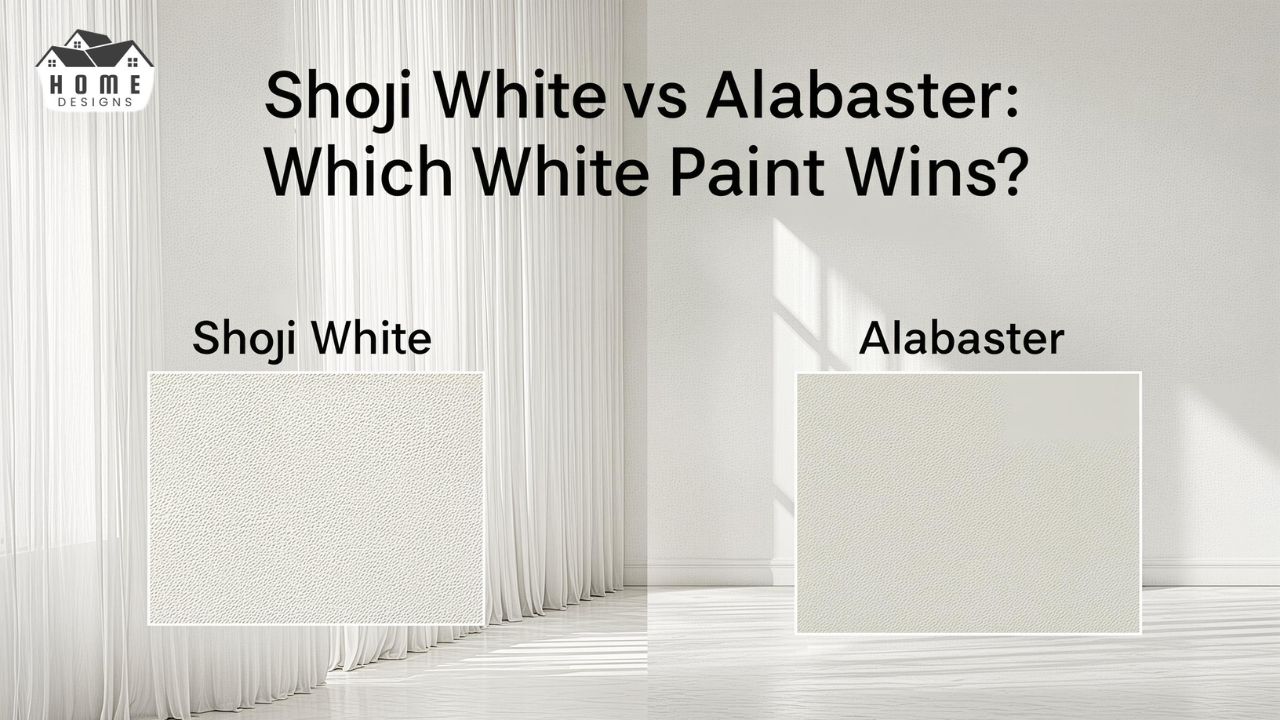
When you think you’ve finally found “the perfect white,” you paint a sample on the wall… and suddenly it looks beige. Or gray. Or faintly yellow. Choosing between shoji white vs alabaster can feel exactly like that — deceptively simple at first, surprisingly complicated once you start testing swatches.
White paint is never just white. It has depth, personality, and subtle undertones that completely shift depending on lighting, flooring, and surrounding décor. That’s why homeowners, designers, and DIY renovators constantly debate shoji white vs alabaster — two of the most popular warm whites from Sherwin-Williams.
If you’re standing in a paint aisle holding sample cards and feeling slightly overwhelmed, you’re not alone. In this guide, we’ll break down undertones, LRV values, room applications, trim pairings, lighting effects, and real-life examples so you can confidently choose the right one for your space.
Table of Contents
ToggleUnderstanding White Paint Undertones
Before comparing shoji white vs alabaster, it’s important to understand undertones.
White paint isn’t pure white unless you’re using something stark like Extra White or High Reflective White. Most modern whites are “softened” with pigments that add warmth or coolness.
There are generally three categories:
- Warm whites – Creamy, slightly yellow or beige undertones
- Cool whites – Blue, gray, or icy undertones
- Greige whites – A blend of gray and beige
Shoji White and Alabaster both fall into the warm white category — but they express warmth very differently.
Shoji White vs Alabaster: Core Differences
Let’s break down the technical comparison first.
| Feature | Shoji White (SW 7042) | Alabaster (SW 7008) |
|---|---|---|
| Brand | Sherwin-Williams | Sherwin-Williams |
| LRV | 74 | 82 |
| Undertone | Greige (gray-beige) | Creamy warm |
| Feel | Soft, muted | Bright, creamy |
| Best For | Modern neutrals | Classic warm spaces |
Undertones Explained
- Shoji White leans slightly gray-beige. It’s a warm greige-white.
- Alabaster leans creamy with subtle yellow warmth.
That subtle undertone shift is what makes shoji white vs alabaster such a debated topic.
Shoji White feels a bit more grounded and contemporary. Alabaster feels softer and more traditional.
Shoji White vs Alabaster in Different Lighting
Lighting changes everything.
North-Facing Rooms
North-facing rooms tend to feel cooler.
- Shoji White may look slightly gray.
- Alabaster retains warmth and feels brighter.
If you want to counteract cool lighting, Alabaster often wins.
South-Facing Rooms
These rooms get warm natural light.
- Shoji White becomes creamy and balanced.
- Alabaster can look quite warm, even slightly yellow in some conditions.
In strong sunlight, shoji white vs alabaster differences become very noticeable.
Artificial Lighting
Under warm LED bulbs:
- Alabaster glows warmly.
- Shoji White looks softer and muted.
Under cool LED bulbs:
- Shoji White appears more neutral.
- Alabaster can look slightly creamy.
Lighting is honestly where most homeowners make their final decision.
LRV Comparison and What It Means
LRV stands for Light Reflectance Value. It measures how much light a color reflects.
- Alabaster LRV: 82
- Shoji White LRV: 74
The higher the LRV, the brighter the paint.
Alabaster reflects significantly more light. That makes rooms feel:
- Larger
- Airier
- Brighter
Shoji White absorbs a bit more light, giving spaces:
- Cozier atmosphere
- Softer tone
- More depth
If brightness is your priority, Alabaster has the edge.
Best Rooms for Shoji White
Shoji White shines in modern and transitional spaces.
Living Rooms
Its subtle greige undertone pairs beautifully with:
- Wood floors
- Black hardware
- Neutral furniture
It creates depth without feeling heavy.
Bedrooms
Shoji White creates a calming, muted environment. Perfect if you want warmth without creaminess.
Open Floor Plans
Because it has gray undertones, Shoji White works well alongside:
- Gray sofas
- Stone countertops
- Matte black accents
In the shoji white vs alabaster debate, Shoji White often feels more contemporary.
Best Rooms for Alabaster
Alabaster gained national popularity when it was named Sherwin-Williams Color of the Year in 2016.
Kitchens
Alabaster is stunning on:
- Cabinets
- Walls
- Trim
It gives that classic farmhouse and timeless interior vibe.
Hallways
Its high LRV brightens narrow spaces beautifully.
Traditional Homes
If your home leans traditional, cozy, or cottage-style, Alabaster feels natural and inviting.
Trim, Cabinets, and Exterior Use
As Trim
Many designers pair:
- Shoji White walls with Pure White trim
- Alabaster walls with slightly brighter white trim
Using shoji white vs alabaster as trim itself depends on contrast preference.
Cabinets
- Alabaster is extremely popular for kitchen cabinets.
- Shoji White works better if you want less cream and more neutrality.
Exterior
Shoji White can look stunning on exteriors because it doesn’t appear too yellow in direct sun.
Alabaster is softer and works beautifully on traditional homes with brick or stone.
Real-Life Room Examples
Imagine two nearly identical living rooms.
Room A:
- South-facing windows
- Light oak floors
- Linen sofa
Painted Alabaster, the room glows warm and welcoming.
Room B:
- Same setup
- Painted Shoji White
The room feels slightly more muted, modern, and balanced.
That’s the emotional difference in shoji white vs alabaster.
Designer Opinions and Popularity
Interior designers often describe:
- Alabaster as “safe and timeless.”
- Shoji White as “versatile and modern.”
Alabaster is frequently used in new builds across the U.S., while Shoji White is often selected for remodels and updated interiors.
Neither is better universally — it depends entirely on your design style.
Personal Background of These Paint Colors
While paint colors don’t have “net worth,” their brand influence does matter.
Sherwin-Williams is one of the largest paint manufacturers globally, generating billions in annual revenue. Its Color of the Year program significantly impacts interior trends.
Alabaster’s Color of the Year recognition boosted its popularity dramatically. Shoji White followed as designers sought warmer greige alternatives.
Both colors remain among Sherwin-Williams’ top-selling neutrals.
FAQs
What is the main difference between Shoji White and Alabaster?
Shoji White has greige undertones, while Alabaster is creamier and brighter.
Which is warmer?
Alabaster is warmer overall.
Which is brighter?
Alabaster, due to its higher LRV of 82.
Does Shoji White look gray?
In certain lighting, yes — especially north-facing rooms.
Is Alabaster too yellow?
Rarely. It’s creamy but subtle unless paired with very cool tones.
Which is better for cabinets?
Alabaster is more popular for cabinets, but Shoji White works for modern kitchens.
Can I use Shoji White and Alabaster together?
Yes, but test samples carefully to ensure undertones complement each other.
Which is more modern?
Shoji White often feels more modern due to its greige base.
Conclusion
At the end of the day, choosing between shoji white vs alabaster isn’t about which one is objectively better — it’s about how you want your home to feel.
If you want bright, creamy warmth and timeless softness, Alabaster delivers beautifully. If you prefer subtle depth, muted greige tones, and a slightly modern edge, Shoji White may be your perfect match.
The smartest move? Always sample both on your walls, observe them morning and night, and let your space tell you which white belongs there.